Experiment · Live video & smile detection
Joybait
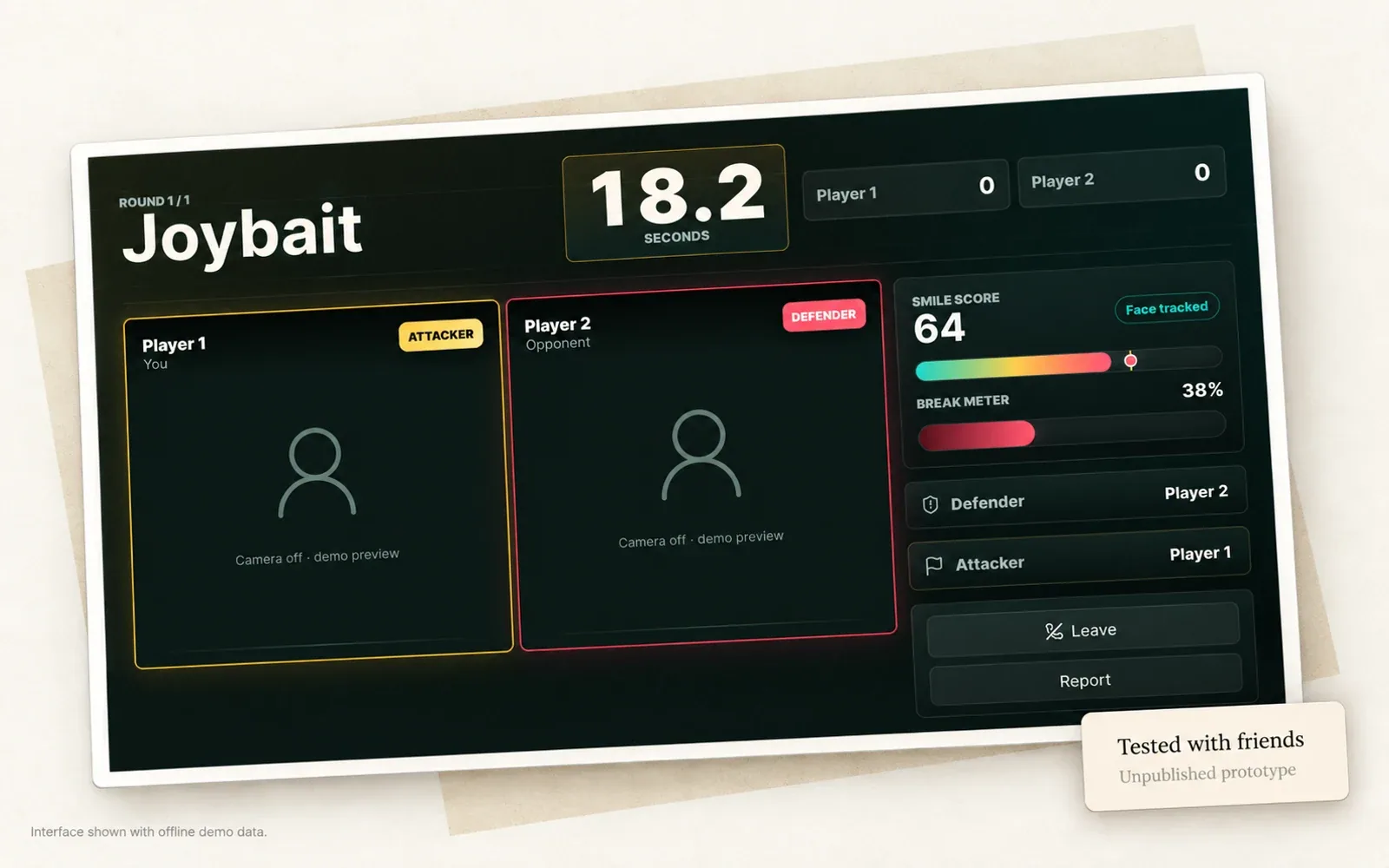
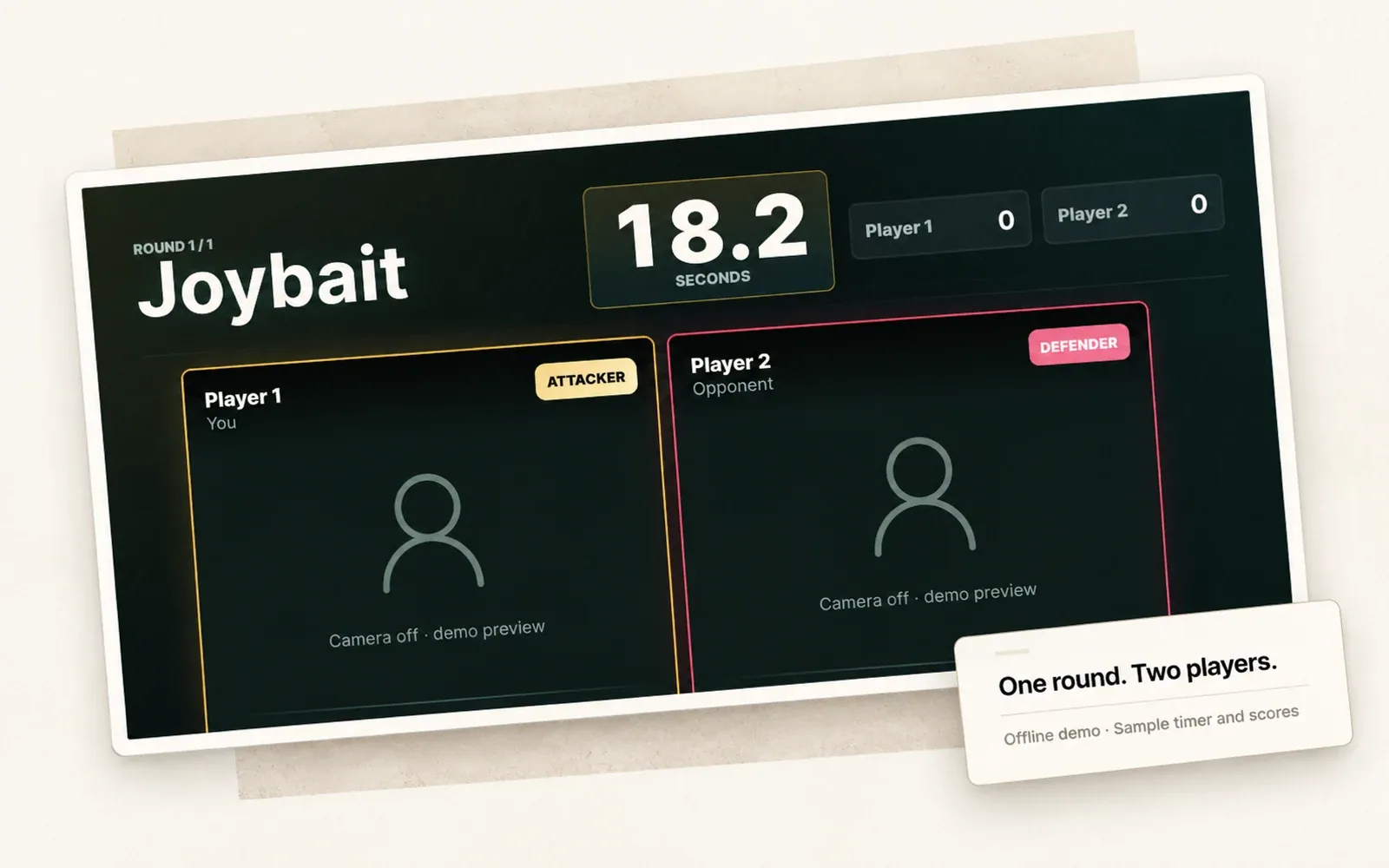
Try to make the other person laugh while keeping a straight face yourself. I built Joybait to see how that would work over a video call, then tried it out with a few friends.
AI-assisted compositions based on the actual prototype interface. Camera feeds are placeholders; players, timer and detector values are offline demo data.
A little experiment
Try not to smile.
Go on, give it a go. Turn on your camera and see how long you can keep a straight face.
A straight face is harder than it looks.
Your camera preview will appear here.0.0s
Your best poker face, please.
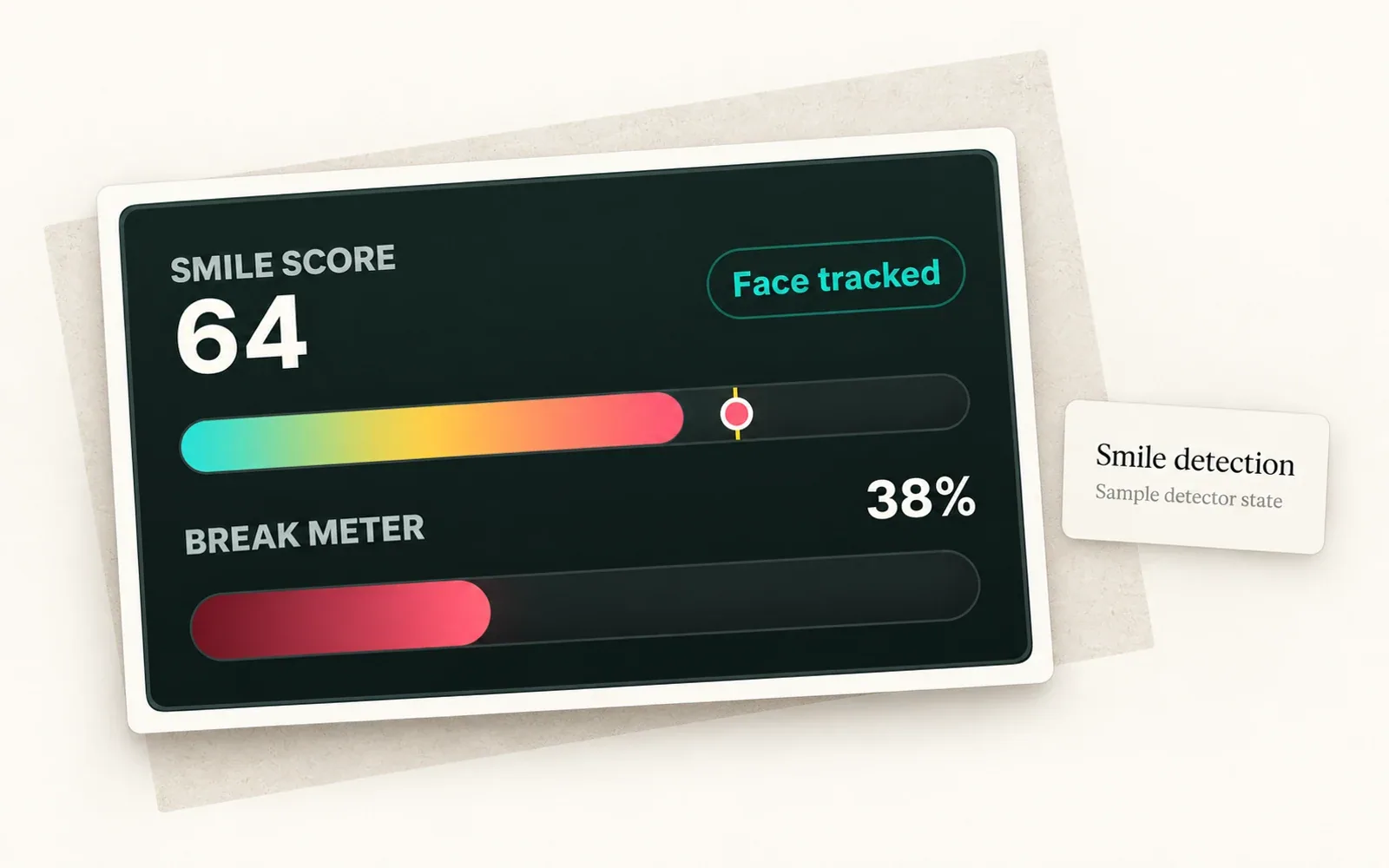
A smile held past the marker ends your streak. No pressure.
Your camera stays on your device.
No audio, uploads or recordings.
A playful estimate, not an exact science. Good lighting helps. Switching tabs turns the camera off.
- My role
- Sole designer & developer
- Exploring
- Smile detection & live video
- Built with
- LiveKit & a self-hosted server
- Status
- Tested with friends · Unpublished
The idea
Who can keep a straight face?
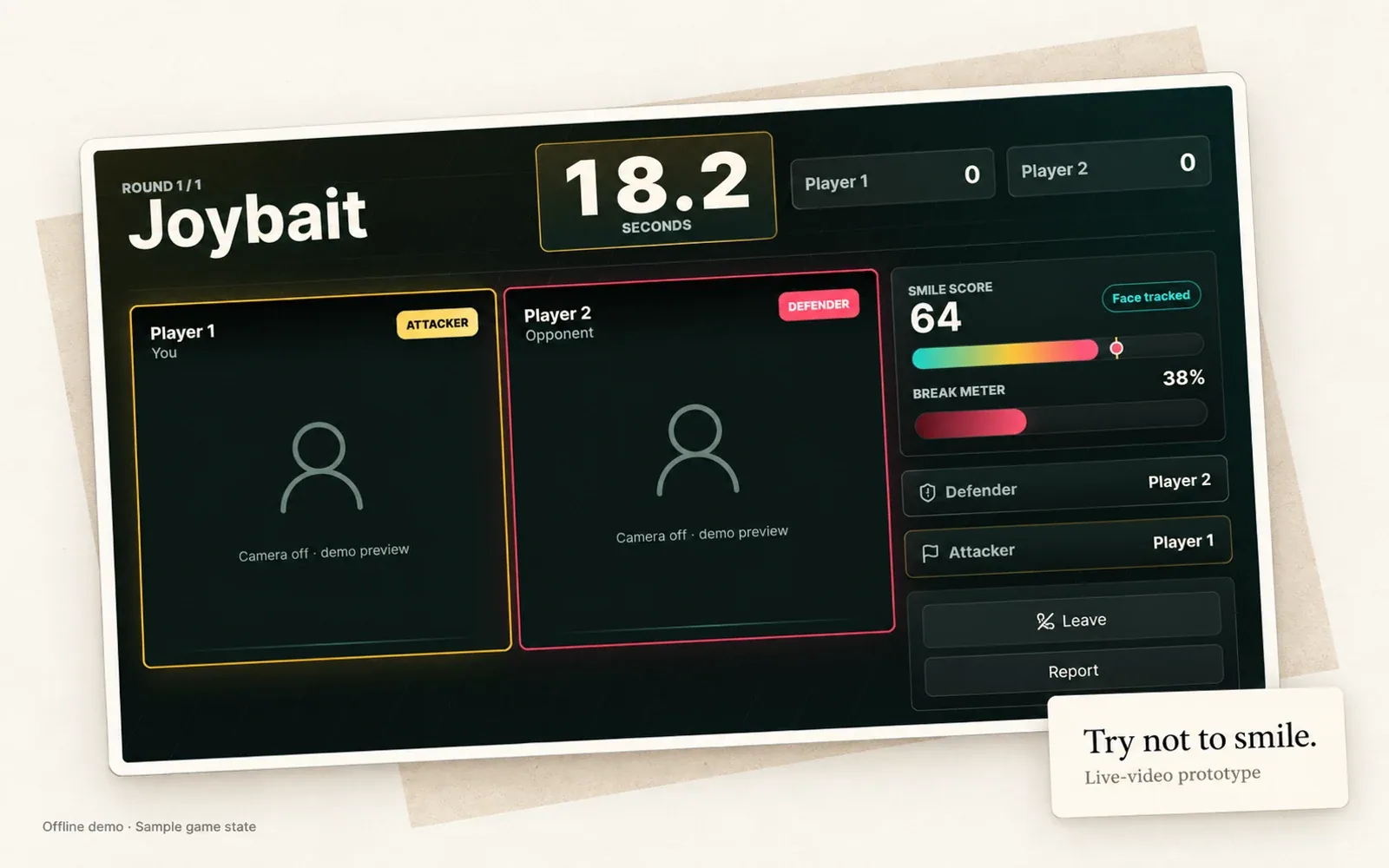
I’d seen the trend of people trying to outdo each other on video calls and wondered what it would be like if the challenge was to make the other person laugh. Each person would try to hold it together while making the other one crack.
That gave me an idea to try with smile detection and live video. I put together a prototype and tested it with a few mates. It worked well, and we had fun with it.
The build
Running video calls on a game server.
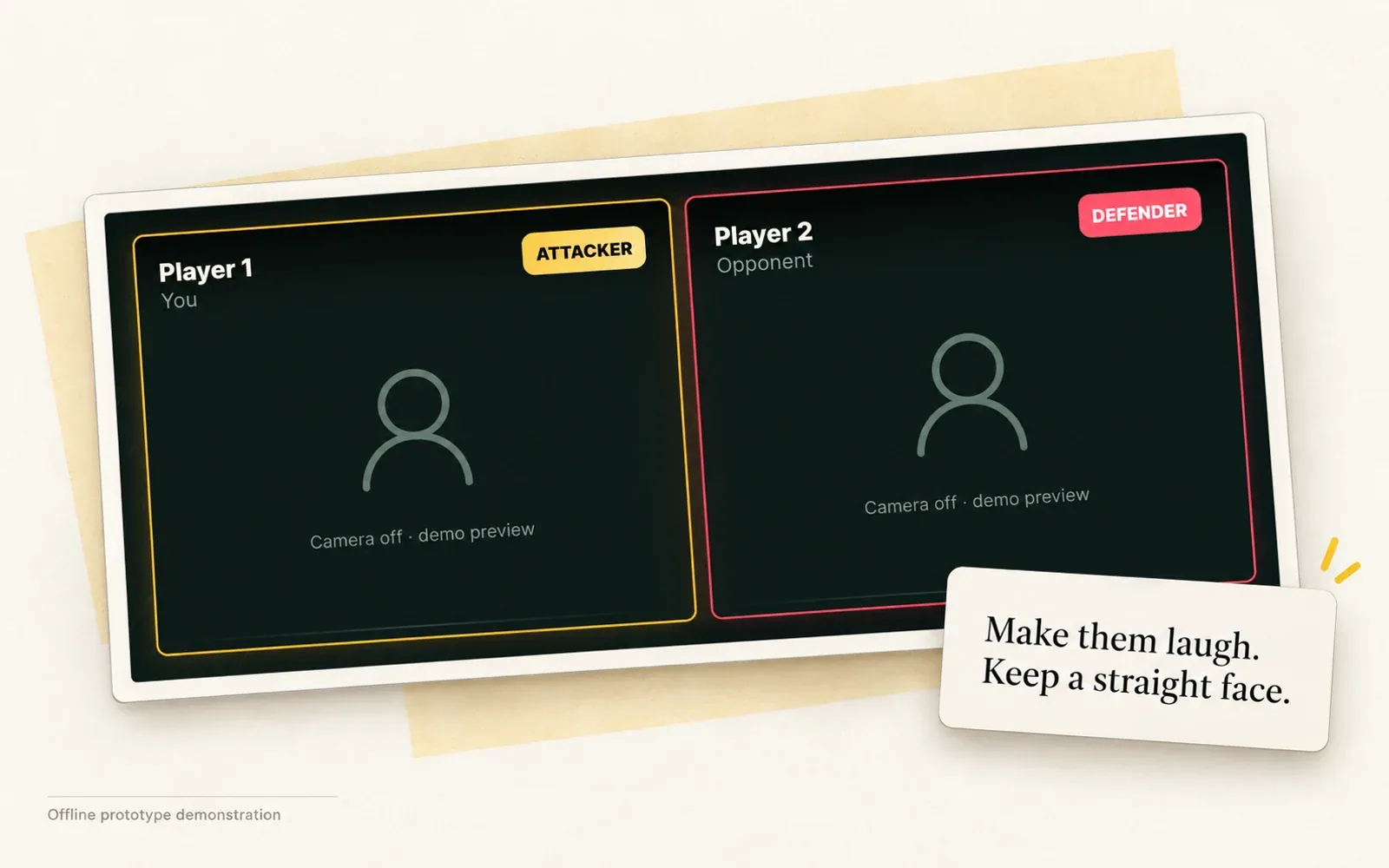
Getting LiveKit set up was the trickiest part. I was using hosting intended for Minecraft servers, so it took some work to get live audio and video running there. I eventually got it working, and enjoyed figuring out the setup.
Where I left it
It needs people to play with.
I didn’t publish Joybait because I didn’t have time to promote it and get people using it. A game like this needs other people online for it to be fun. For now, it remains a working experiment I played with friends.